![ExpensePoint White Logo.png]](https://support.expensepoint.com/hs-fs/hubfs/ExpensePoint%20Logos/ExpensePoint%20White%20Logo.png?height=40&name=ExpensePoint%20White%20Logo.png)
The Transaction Manager enables seamless integration with various financial institutions, allowing smooth data flow between different systems. This integration makes it faster and easier for users to submit Expense Reports by making transaction data readily available within the system. As a result, the reimbursement process is faster and more efficient.
Expense Policy Compliance and Enforcement
The ExpensePoint Transaction Manager helps ensure compliance with company expense policies and regulations by enforcing expense rules and approvals on the expensed transactions within the system.
Managing Corporate Cards
Corporate cards are credit cards issued to employees to cover business-related expenses. You can link all corporate cards issued within your organization to their respective cardholders in the system. Once this is set up, you'll have a comprehensive overview of all user transactions within your organization, and you can easily track transactions that are pending submission.
Accessing the Transaction Manager
To access the Transaction Manager:
-
Log in to the system.
-
Select the Transaction Manager module from the top of the screen.

Note: If you do not see the Transaction Manager module, please contact your administrator, as admin access is required for this module.
Transaction Manager Workspace Layout
The workspace contains a list with two main columns:
-
Template Name: Displays the name of the Credit Card Integration, which is typically the name of your bank or financial institution, helping you distinguish between them.
-
Owner: Indicates the cardholder or the administrator responsible for the corporate cards.
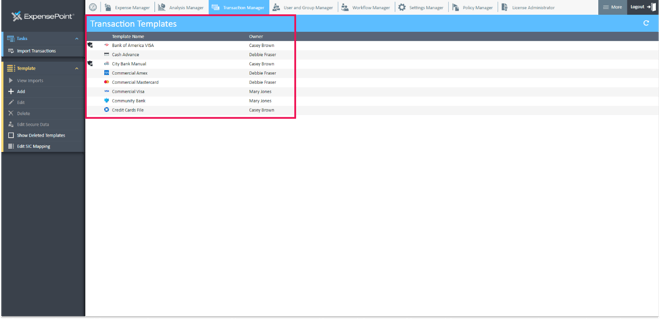
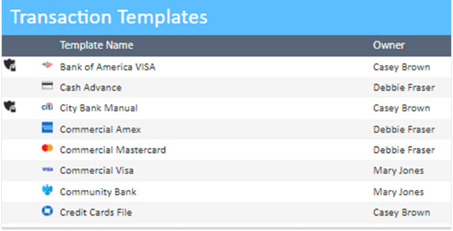
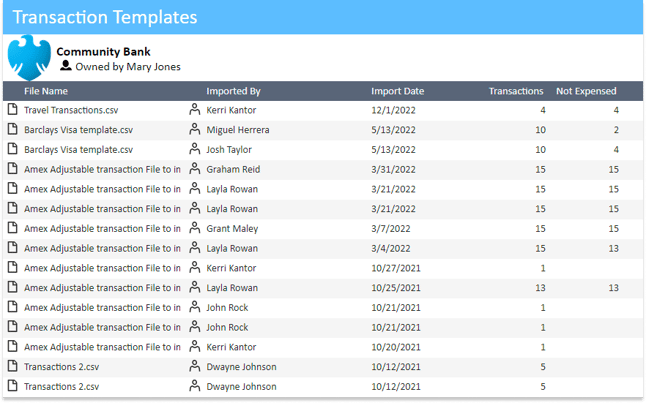
By selecting any of the templates from the list, you can review the latest file imports from the linked financial institution. Each template shows:
-
File Name: The name of the imported file.
-
Imported By: The name of the user who initiated the file import.
-
Import Date: The date the file was imported.
-
Transactions: The total number of transactions included in the file.
-
Not Expenses: The number of transactions that have not yet been expensed.
- Not Assigned: The number of transactions that have not yet been assigned.
- Turn this filter on by checking the Show Unassigned Transactions option in the Tasks menu on the left side of the screen.
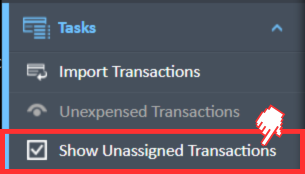
- Once the option is selected a new column will appear.

- Turn this filter on by checking the Show Unassigned Transactions option in the Tasks menu on the left side of the screen.
Note: If you have not set up any integrations with your financial institution or have not imported any files with Transactions, the workspace will be empty.
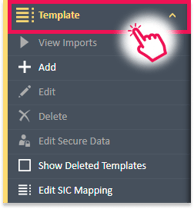
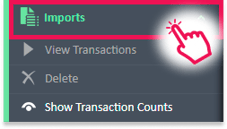
The navigation menu on the left side of the screen offers the following options:
-
Tasks
-
Templates
-
Imports
Templates
Templates standardize the format of transaction data, making it easier to import and process. They simplify the import process by providing a structured and predefined format. This consistency reduces the likelihood of errors during the import process.
Templates also allow you to map data from external sources (e.g., credit card statements or bank statements) to specific fields in the expense management system. This ensures that data is accurately categorized and attributed within the system.